
September 26, 2025
The Gamo people are primarily located in the Gamo Highlands of southern Ethiopia, with their administrative center in Arba Minch. They are a significant group, with a population exceeding one million.
Language: The Gamo people speak the Gamo language, which is part of the Omotic language family. The language has various dialects, and there's some debate regarding the exact linguistic classification of some sub-groups.
Livelihood: The Gamo are renowned for their sophisticated and sustainable agricultural practices. They have developed traditional food systems that interweave diverse crops (like over 65 varieties of barley, 12 of wheat, and 100 of enset) with forestry and livestock production. This has historically helped them resist food shortages. Weaving is also a significant economic activity, with traditional clothes like Kuta, Gabi, Buluko, and Dunguza being produced.
Culture and Social Structure: The Gamo have intricate traditional laws called Wagas that govern land use, interpersonal relationships, and natural resource management, reflecting a strong belief in the interconnectedness of all things. Their social structure historically included a hierarchical system, with artisans like potters and ground stone makers relying on craft production. Gamo music and dance are also prominent in Ethiopian national entertainment, influencing various styles and rhythms.
Religion: While their original belief system was rooted in traditional African religions tied to nature, today most Gamo people are either members of the Ethiopian Orthodox Tewahedo Church or Protestantism.
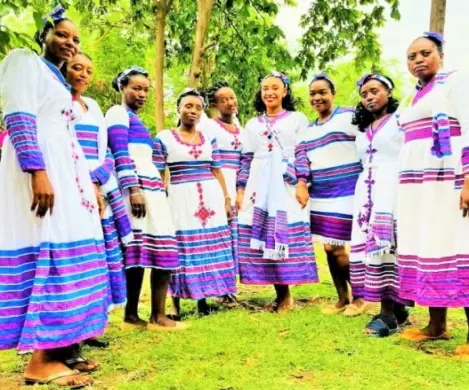
The Zayse people reside to the immediate west of Lake Chamo, in the southwestern part of Ethiopia, bordering the Gamo to the north. Their population is considerably smaller than that of the Gamo.
Language ፡- the language of Zayse is called Zaysete. Zaysete is grouped in to Afro-Asiatic super family of eastern group of north omotic language family (Bender 1976). The language is currently used for day to day communications by zayse people.
Livelihood: - farming is one of the major means of livelihood of Zayse. Livestock production and bee keeping economic activates are brings additional income. In two different climatic conditions ´Dega and Woyna-dega´ they cultivate crops like maize, teef, sorghum and barley. The Zayse farmers are well known by cultivating cotton from enchant time to present. Because of this the nick name called ´Zayse Futa Dure´ meaning Zayse rich by cotton is given to Zayse by their neighbors. The lowland kebeles are well known by producing fruits and vegetables like banana, mango, avocado, papaya, tomato, onion etc. Zayse peoples are well known for their traditional and indigenes knowledge of weaving, pottery, metal work and hand craft. Large numbers of peoples are engaged in these economic activities to support their livelihood.
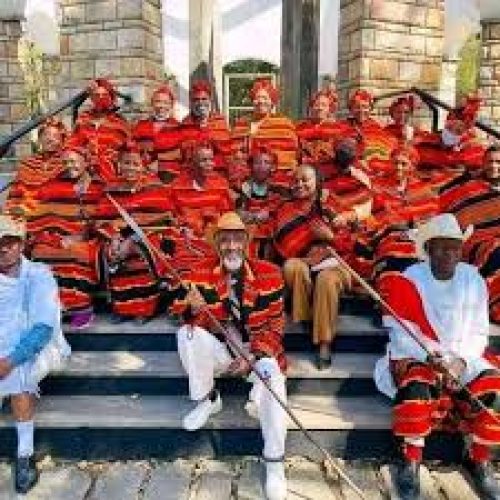
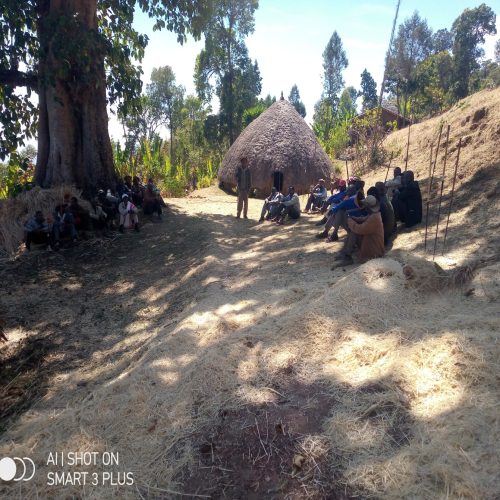
Culture and social structure: - The Zayse nations have their own cultural artifacts that make them one of the 32 nations and nationalist found in southern Ethiopian regional state. The Zayse have their own traditional clothing culture. ´Pizo´ is Zayse nation’s traditional cultural cloth. They have their own traditional foods and drinks like ga´aa, tiuluqa, buba, utuka and drinks like modo, qayla and fuga. In addition to these they are also known for their unique circular traditional house called kara kets. They have their own way of life, marriage tradition, language, hair style, music, music instruments and traditional dance are among many cultural wealth of Zayse nation.
Zayse nation’s traditional administrative, economic and social system was governed by Hayse. This traditional administration was led bay ´kat´ king, who held absolute hereditary power. There are seven counseling maagas and twenty one administrative magas who are supported by sorofa and elders. A core value for the Zayse is bizite, emphasizing group identification and cooperation in work arrangements. They value hospitality and peaceful coexistence.
Religion: - before the establishment of Christianity the Zayse peoples believe the universe and all creatures are created by Bazo God who reside on the sky. When the community members are disappointed by some evil-doers, they raise their eyes to the sky and stretch their hand and beg Bazo to give them solution and security. In 1894 orthodox tewahedo cherch was established in kaybene. Following this large number of peoples was followed it. In 1953 Protestantism was begin and a number of communist are baptized and converted to protestant. Know a days more than 70% of Zayse peoples are protestant and the reaming percentage of the society are orthodox tewahedo.
Conflict management methods (Chimete) ፡- the zayse nations has traditional conflict resolution culture that is inherited from forefathers. When conflict arises and crimes occur, the maaga orders the sorofa of the territory to check where crime took place. The sorofa brings the criminal before the traditional court. Wise elders investigate the case with care. After investigation the victim is compensated and gives mercy to offender. If the case is murder, looting house, physical harem, abduction and the like the issues are presented to kat and is consulting maagas. The kat, consulting maagas, sorofa and elders discus and bring Jesuits. A place that issues are discussed in Zayse is called Gura.