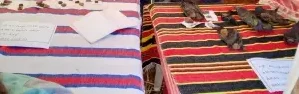
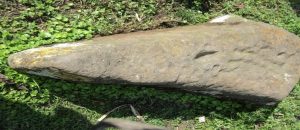
The Ocholo rock carving is located in Ocholo Muta Kebele. However the kebele in the Arbaminche district, 20 km from the district capital, Arbaminche. This rock carving has eight holes that appear to be made for playing gebeta. And the arrangement of the holes does not follow the traditional gebeta playing row. Finally, It is not known exactly why the local community used the holes. But there is no doubt that the carving is a result of human handiwork. However, future research and studies are needed on this heritage.
Marta (Zayse Nationality Traditional Administration Palace)
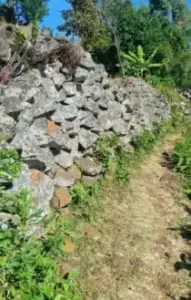
Marta (Zayse Nationality Traditional Administration Palace)The Zayse Nationality’s traditional administrative system is known as ‘Haise’ or ‘Woga’. It is a traditional and indigenous system that governs the social, economic, administrative and universal interaction of the nation. Under this system, the Zayse State was sovereign until 1886 AD. The Haise administrative system has a permanent and central seat. The kings from the first Kat Ale to the 12th Kat Mesha used Josha as their central seat for centuries. The administrative center was moves from Josha to Kaibene Marta during the reign of Kat Oga, according to the ancestors of the nation’s history. Marta was built and rebuilt during the reign of Kat Oga and has been the center of Zayse administration since the reign of Kat Zona. Since ancient times, many kings have ruled and governed their people. Marta is an ancient Zayse palace located in Kaybene Kebele at an altitude of 1948 meters above sea level. The palace, which was used as the administrative center and residence of the kings by the Zayse community, is known as ‘Marta’ in Zayse. The reasons given for the relocation of the palace from Xosha to Kaibene are: the first is the increasing population; the second is the search for land for agriculture and grazing of livestock that can accommodate the increasing population; the third is the search for a strategic location to prevent conflicts with neighboring states; and the fourth is the fact that Mount Kaibene is the highest point and the highest point of the Zayse kingdom, and it is also a convenient central location for the general administration system, as it allows you to view the four directions. Marta is a reflection of the ancient Zayse civilization. And the palace that was previously in Xosha was moves to Kaibene. And the palace was surroundes by a special stone wall. Which is the seat of the Zayse traditional administrative system. Marta was the central administrative center where the social, economic and political events of the Zayse nation. If took place until the invasion of Menelik. The stone pavilion, built in three rounds with special skill. Is three to four meters high and has a side width of up to two meters. And covers an area of about six hectares. It is enough to understand that the design, width and depth of the construction have left a special artistic mark on it. Considering that it has stood for many centuries. The Marta compound is six hectares and includes the ‘Sanga’, . The main residence of the king, Dere Dulata, Marta Gura, no less than eight groves of various sizes. Including indigenous trees such as coffee, warka, shola, olive and basana. Marta’s entrance gatesMarta Palace is a very beautiful and beautiful compound as it is. The Marta compound, which covers more than six hectares, is well-walles with stone pavilions. The construction of the Zayse royal palace in Xosha began during the reign of the 10th king. Who believes that it should be moves to Kaibene Marta. This is estimats to be in the 15th century. Marta is a monument that reflects the ancient history, wisdom and civilization of the Zayse people. The stone wall built many centuries ago is still standing today. The fact that it has stood firm without any problems of decay or decay over time is a testament to how wise the construction was. Marta has two main entrances, the first is on the south side and the second is on the west side. The first and largest door is on the south side. There is a door in the direction of the church. According to the elders of the nation. It was the route uses by the nobles coming to the Zayse kingdom from the south. To the right and left of the entrance, from the gate to the center. You will find a beautiful stone courtyard, about one hundred meters long, two meters high, and two meters wide. As you walk inside, you will pass through four different courtyards before reaching the king’s residence, the Sanga. The courtyards were also home to the servants and employees of the palace. In addition, some of the many houses in the Marta courtyard were used as guest houses. Since people from different parts of the Zayse kingdom came to Marta for various reasons. They would rest until their cases were resolved. Those who served the guests also had their own houses and courtyards. So Marta is a palace with no fewer than eight different courtyards. The houses in the large courtyard all have their own stone courtyard walls. In the large courtyard, there are smaller courtyards with stone courtyard walls. So the large gate is usually used as a gate for the disabled. The second gate to Marta is on the west side of the palace. It is towards Bano. The function of this gate was to serve as an entrance gate for Marta Gura. A gathering or meeting with the Magas and for social events to be hold in Marta. The entrance directly leads to Marta Gura. Like the first gate, it is surrounds by stone walls on both sides. According to the history experts of the nation. This gate is usually the gate through which Magas, Sorfas, and elders of the country enter. The distance from the entrance to Marta Gura is about three hundred meters. The main road leads to Marta Gura, while other small roads branch off and lead to different courtyards. If you want to go to Marta Gura, just take the wide road.
Eight different service areas
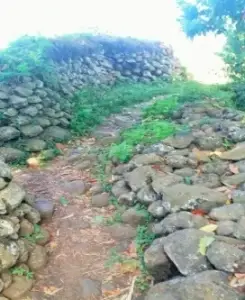
Eight different service areas As we have tried to see above, Marta is a palace with a very large courtyard. Its area is about six hectares. What makes Marta unique and amazing is that it has a self-contained village inside. When you enter through the main entrance, you will notice many small courtyards with houses that used to be the palaces. The main courtyard, called Sanga, is the residence of Kat and Kao. It is located in the southeast of Marta’s courtyard. From here, it is a strategic place from which you can see Elgon and Wezeka across the Shanka Plain to the Zaise State of Kola. The courtyard is windy because the wind rises from Lake Chamo. There are many other courtyards that used to be the palaces and provide various services, including guest houses and the residence of the palace servants.
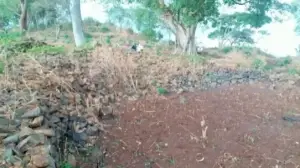
Dere Dulata (People’s Council)
Dere Dulata (People’s Council)The courtyard next to the king’s residence is the Dulata area where the social, economic and administrative plans of the Zayse people are developed and discussed. It is the government department where the general activity plans of the state are developed, reviewed and decisions are made for their implementation. Finally It is the government department where new social, economic and administrative plans are designed and existing ones are reviewed. When The king, the king’s advisors, and the elders participate in the discussion. The majority of the participants in the discussion are different, depending on the stakeholder groups participating in the discussion agenda. Additionally The discussion agendas presented in each Guta Maga are attended by the Maga, Sorofas, and elders in the same area. But if the agenda concerns the entire Zayse state, all 28 magas, along with the sorofa and the elders, will participate. But the king and his advisors are permanent and decision-makers. We have seen above that one of the issues seen in the Dere Dulata is an administrative function. If In the middle, information about the relations with foreign states, which ensure the peace of the state, is collected from various sources, discussed with the Oge Magas and Tora Magas and the Yeguta Magas, and a report is submitted to the head of the state, the Kat, in this Dere Dulata. In addition to internal affairs, foreign relations plans are developed and presented for discussion. In general, social, economic and administrative plans regarding foreign relations are prepares in this public council. The Dere Dulata Assembly Hall is a traditional gathering hall where the current situation is assessed, directions are set, and decisions are made. Another administrative issue is to maintain the peace and security of the residents of the territory. If disputes and conflicts between individuals, communities, and tribes are not resolved. When Through the lower-level mediation system. The matter is carry to this assembly hall. And a decision or settlement is make in this same Marta meeting place. When disputes and conflicts occur between tribes. Serious crimes are committee’s, and dispute arise with neighboring states, the matter is dealt with in this assembly hall. When serious social, economic, and administrative situations arise in the Zayse ethnic group. The Dere Dulata is a public assembly where elders, sorofas. And magas consult with the king and set a direction for resolution. The photo below shows the seats of the Kat Khama, Kat Salo, and Kaibene Maga. Where they sit and discuss issues with their advisory Magas. Starting with the king, all Magas, Sorofas, and elders of the country, have their own seats at each level.
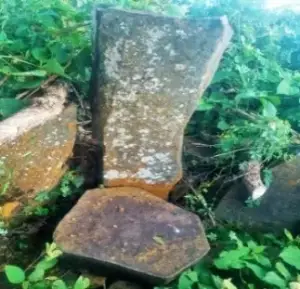
E’o Malo /Tekkel Dingay
E’o Malo /Tekkel Dingay/ When public events, traditional music and dances are performed in Marta Gura, invited guests, elders, sorofas, magas. And kings of neighboring states sit with the Zaise Kat in order of rank and enjoy the event. The Kat Kama seat that we see in the picture is carved with a special design. It has a long backrest and the seat is also made of stone. The stone is carved with special skill and is carved like a long stone for a specific purpose. The Tekkel stones carved and erected by the early Zaise craftsmen are found in various places. And the one in the Marta Gura courtyard should be taken as an example. The stone is specially cut and prepared before being placed on a pedestal.

Oibale Boke (Oibale Fortress)
Oibale Boke (Oibale Fortress) It is located in the southern part of Zayse, in an area called Oibale. The fortress got its name from the name of the area where it is located. Oibale Boke starts from the peak of Shanka /Kola/ and crosses the plain and the ridge and reaches the Laboshe Shafe /Laboshe River/. This means that it starts from Shanka plain and reaches the Derashe border. Oibale Fortress is about seven kilometers long. Its average height is one meter and seventy centimeters high and its width is one meter and twenty centimeters. It is located at an altitude of 1502 meters above sea level. When It was built about 170 years ago during the reign of Kat Khalsa between 1845 and 1860 AD, according to the nation’s historians. It is a testament to the craftsmanship and perseverance of the Zayse ancestors. It took years to complete. Finally It was built entirely of stone and was built in the form of a cube with special skill.When Boke, which was built in the direction of Sot in the Zayse territory, was built under the leadership of the king and the Guta Magas and was coordinated and built by the Zayse nobles. Finally Communities in the southern Zayse territory directly participated in the construction. Oybala Boke, which is said to have taken a long time to build, involved a large number of people. It is mostly used by the residents of Yeguta outside the sowing, weeding and harvesting seasons. While men participated directly in designing, delivering stones, building, and coordinating, women would come to the construction site to prepare various traditional foods and drinks, and to encourage, praise, and celebrate with their traditional songs, according to the nation’s historians. The elders, magas, and the king would visit, encourage, and bless the construction process from time to time.
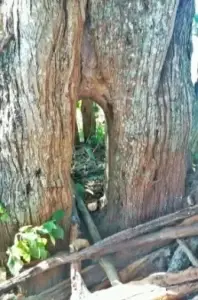
The tree where Kat Salo ruled
The cedar tree where Kat Salo ruled is currently located in Zayse Kalte. Kat Salo’s father passed away before Kaba became king, so the kingship was transferred to Salo. Even though Kaba did not become king before Salo became king, he had children. Salo was an Ekade, so he abdicated in 1929. Going back to our previous story, the cedar tree where Kat Salo ruled was thick and thick enough to allow a person to crawl inside it. As is known, the cedar tree does not grow quickly and does not get thick. It must be at least twenty to thirty years old to be used for royal purposes. It has been eighty-six years since the day of his reign. This makes the tree more than a hundred years old.
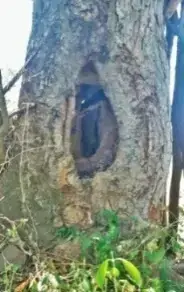
The tree under where Kat Xoona ruled
The tree under which Kat Xona ruledThe tree under which Kat Tsona ruled is a ‘Dondo’ warka, located near the Zaise Dembile Kebele Administration Office. After the death of his father / ascension /, Kat Tsona became king in 1955 AD, and the historical warka tree under which he ruled is still there today.
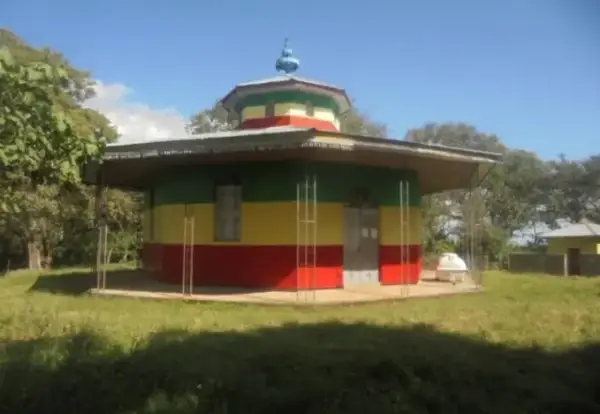
Zayse Holy Kidane Mihret Church
Zaise Holy Kidane Mihret Church Orthodox Tewahedo Christianity was introduced to Zaise in 1893 AD, and the first church to be established was the Holy Kidane Mihret Church. The church was built in Kaibene, which was the administrative center of Zaise at the time. It is now a new building, and it is said that the previous one was built with a special design using local building materials. The history of the origin and establishment of the church has a positive historical background with the people of Zaise and the central government led by Menelik II. Let us briefly look at the history of the origin of the church, which was the beginning of the introduction of Orthodoxy to Zaise. The Zaise administrative region was annexed to the central government and Kat Khama Lemnilik ruled Zaise in 1893. A man named Tino Samale from Birgushe found lion cubs and took them to the king. Tino was a Tatar farmer, cattle breeder, beekeeper, hunter, and brave man, according to his son, Tino. One day, while hunting in a densely forested area called ‘Bade Boche’, he found three lion cubs without their mother. Since the cubs were still young, he carefully carried them home by their clothes. The process was not easy, his son explains. The mother had left her cubs and gone hunting, so when they heard the movement, they thought their mother had come. This time, Tino found them. The way he returned home with the cattle was to delay the disease so that it would not reach him. The method was to create a fire and burn the grass around it so that the smell was not noticeable. He took it home and kept it in the barn, fed it with meat and milk, and after keeping it for a few days, he would inform Kat Kama and take it to Martha. In the Zayse community, when a specially fattened cattle, azart, material, sword, spear. And any other thing that could be of special importance and could be given as a gift. It was given to the king as a gift. The system is called “Yeso” in the nation and after receiving the gift. The king would bless him by saying, ‘Bira Ades Ne Edes Bish Bir Ada’ because you have given the best. Accordingly, Tino Samale presented the cattle to the king as a gift. The Debolos drink milk and eat meat and stay with the king. When Menelik’s officials who were in the area returned to Shewa. They told Menelik II that there was a king in the Zaise area who was loved and respected by the people. Along with the Debolos’ Tark. Menelik was surprised by what he heard and wanted to see the king and ordered his officials to bring them. Menelik’s officials explained the situation to Kat Khama and took some of the king’s advisors. Including Tino Samale, with them and went to Addis Ababa in December 1893. When they left, they brought lion debolos, ivory. And incense called Banja as gifts for the king and presented them to King Menelik at his palace. The king was very happy and surprised by the gift, and in response. He offered the Holy Kidane Mercy Tablet as a gift, saying,. “If I give you anything else, it will not benefit you, so I will give you an ark.” The Holy Kidane Mercy Tablet was also accepted as a gift among all the other tablets. Kat Khama, accepting the gift, returned to Zaise in March with the priests and priests’ servants. Who performed the religious ceremony and left her tablet in a tent in the courtyard of her palace. Huwala built six chapels in 1894. The church began to provide regular church education and services from 1895. Thus, the Orthodox Tewahedo faith entered Zaise. It remained the only religious institution until the 1950s. It attracted many followers, spread religious teachings, and celebrated religious festivals with great enthusiasm. After the 1950s, the number of believers began to decline. The reason for this is that Protestant Christianity began to be preached in Zayse and many people moved there. Originally built in a traditional style, it was rebuilt in a new form in 1999. Tino Samale was also given a gift by Menelik II, according to his son. He was awarded a turban and a bolale, but when he died in August 1957, he was buried with them. He regretted that it was done without his knowledge, but it should have been kept as a heritage.