
Conflict management methods፡– the Zayse nations has traditional conflict resolution culture, that is inherited from forefathers. When conflict arises and crimes occur, the Maaga orders the Sorofa of the territory to check where crime took place. The Sorofa brings the criminal before the traditional court. Wise elders investigate the case with care. After investigation the victim is compensated and gives mercy to offender. If the case is murder, looting house, physical harem, abduction and the like the issues are presented to Kaat and his consulting Maagas. The Kaat, consulting Maagas, Sorofa and elders discus and bring Jesuits. A place that issues are discussed in Zayse is called Gura. Gura: – this is a place where elders, Maagas and Kaat discuss society’s problems and make solutions. They also use this place as a playing and refreshing site. The Maagas sit on stones which have been seats of their forefathers. Issues are discussed by elders; the plaintiff appeals his case to Sorofa. The Sorofa talks about the issue to the Maaga. If they succeed, the elders arrive at solution through arbitration. If not the Maaga convinces both party. The Maaga takes a seat on a stone while the Sorofa and elders take seats on ground to express their status is below the Maaaga. The Maaga orders the Sorofa and the elders to make decisions about the case. The elders report to officials how the whole process takes place. At the meeting headed by Maaga, first the youngsters then the elders suggest decisions. Finally the Maaga makes decision. This is the end of the jurisdiction procedure. The conflict management proses are led by Maaga it is takes place in a place called Guta Gura. The Maaga could assign village head, Sorofa and elders who solve problems like stealing, adultery and other cases in his domain. Well known men are also included. If the Maaga failed to settle a problem, he takes the case, with elders, before the Kaat. The Kaat decision is the final one. And it is takes place in a place called Martta Gura. Traditionally an elder may insult his junior when he misbehaves or fails to do what was ordered by his senior. Elder brother often acts as a head of the family in the absence of his father. But if a younger brother insults his elder brother, people stand against the younger and he is regarded as a naughty. The younger brother, therefore, had to beg pardon from his elder brother. Customarily he kisses his elder brothers feet implying request of apology. When ones crop is grazed by another person’s animal, the person whose crop is destroyed by the animals shows the damaged crop to the people around. The men who saw the person whose crops destroyed blesses the man whose crop is destroyed saying; “let God help you regain what you have lost”. This is regarded as a good blessing opportunity for the loser but a curse; people take care of their cattle seriously so that they may not graze someone’s crop. When ones cattle graze others crop the former wouldn’t predicate the animal but the man who harms others crop pays money as compensation through elders. Most of the time in the Zayse culture compensation does not received. Conflict between husband and wife is seriously handled not to end up in divorce. Elders often carefully investigate the cases of the conflict. When the elders find the cause of the conflict is minor, they negotiate the spouses to live together. If a woman opposes the elders decision and her fault is found to immense. The case goes to the head of the Indir Maaga ´woman affairs´ and the head may punish her. However, if the case of the conflict is concluded to be the fault of the husband by the elders and arbiters, the husband pays as indemnity money for the Kaat, Maaga and his father in-law. To get pardon from his wife, he brews sena modo ´local beer´ with the help of his neighbors and he invites his wife and others to drink the sena. The woman then returns to her home peacefully and with respect. Murder is a serious crime to be handled with special care. When someone kills a person, the case is brought to the Kaat. Final decisions are made at Matta. The elders, Maagas and the Kaat strive to avoid revenge and scrutinize whether the murder was deliberate or an accident. If a murder was by accidental, they convince the victims’ group members that it was an accidental and the arbitration is made peacefully. If the murder was found to be a deliberate, the conflict management chiefs often led by Salile Maaga, preform ritual at the presence of the victims and murderers families. The two groups come to gather in front of Kaate, Maaga and elders and say now on wards we are friends. The Maaga makes statement “do not eat and drink holding a grudge, the past is over, remember you are fellow men”. In this way the conflict resolution ritual is concluded. If a man does a crime repeatedly, people make petition that his case should be considered seriously. The criminal of such is hanged by Buse maaga. The public welcomes this type of measure. If the people of the criminal thought they were unfairly treated before the law of the Maaga, they bring their case to the Kaat at Marta. The Kaat convenes the two party’s case through careful scrutiny of the cause of the crime and solve it. Both groups say “we all are Kaats people” the penalized man’s group is now free and peace is settled. The victims group will not take blood price. The arbitration by the Kaat guarantees peace and it helps price. The arbitration by the Kaat guarantees peace and it helps to avoid grudge. Seara: – elders decision has always been accepted in the society. But ether party in conflict opposes and does not agree to arbiters’ decision; the man in question is
Gamo Dunguza
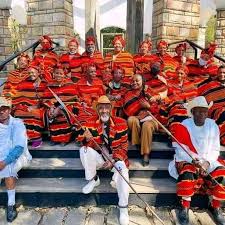
“Gamo Dunguza” is a multifaceted term that encompasses both a profound cultural concept and a tangible landmark in the Gamo Zone, particularly in Arba Minch. Gamo Dunguza: Cultural Significance At its core, “Dunguza” represents a vital element of the traditional Gamo administrative and justice system, deeply rooted in their indigenous knowledge and values. It is often synonymous with Dubusha, a highly respected and sacred place or forum where the Gamo people historically, and to a certain extent even today, resolve disputes and manage community affairs. Key aspects of its cultural significance include: Traditional Governance and Justice: Dunguza (or Dubusha) serves as a traditional “court” or assembly where elders, known as Halekas, and the paramount leader, the Kawo (king), preside. They apply customary laws, known as Dere Woga, to guide decision-making and ensure social harmony. This system emphasizes dialogue, consensus, and restorative justice, aiming to reconcile parties and maintain community cohesion. Community Deliberation and Decision-Making: It’s a central gathering place for the community to discuss important issues, make collective decisions, and address both minor and major concerns impacting their lives. Cultural Preservation and Transmission: Traditional ceremonies and rituals, such as the “Yo Masqala holiday” and “Sofa ceremony” (related to marriages), often take place at Dunguza. These events are crucial for reinforcing community bonds, transmitting cultural knowledge to younger generations, and ensuring the continuity of Gamo traditions. Symbolism of Respect and Blessings: The place of Dunguza, particularly the Dubusha Fash (the seat of the Kawo), is considered sacred. Rituals involving the application of honey and butter symbolize blessings and prosperity for the community, highlighting the Kawo’s role in their well-being. Emphasis on Truth: In Dunguza meetings, the telling of truth is paramount. Improper behavior like lying is considered a violation of taboos and believed to bring misfortune.
Pottery
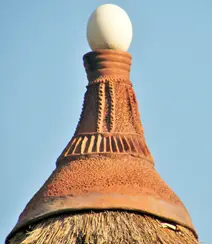
Pottery is one of the most popular crafts in our district. The sages have been producing clay products that provide various services to the society since ancient times. The expert explain that various clay products. Products make in the traditional way have been hand down from father to son since ancient times and reache today. The professionals are their permanent livelihood and do not engage in farming except occasionally. They call their Midogumu their livelihood by selling the various clay products they produce in the local markets. Pottery Occasionally they produce to order. The soil used for pottery is select and filtered from unnecessary impurities before grinding. It is then traditionally ground to crush. When it is thoroughly dry, it is covere with water and keeet for two to three days. Women are involved in this work. Borde GaneThis type of work requires experience and perseverance. The process can take days to weeks from start to finish. When finishe, it is fire like other clay products to give it strength. ‘Borde gan’ as the name suggests, the service is mostly use by Borde for baptism. The largest Modo Ota has a capacity of over 100 liters. The smaller ones serve as a refrigerator by cooling the water. The water that is pump for drinking is turn over and cool down to be use for drinking. Due to careful handling, a single device can serve up to 20 years. Diste A pot is use to prepare food. ‘Diste’ is derives from the Amharic name for pot and is make by local artisans. The origin of the design is believe to be in the Menelik era. The community uses it alongside atta, especially to make stew. WancaA bathhouse is a traditional bar where traditional drinks are consum. Cup traditional drinks are servse. Drinks are served and drunk at social events such as weddings, festivals, and festivals. Cups are mostly a drink for adults, while young people drink from a drink made from a horn. Craft by skill potters, the cup has a handle and is carefully craft for easy storage. The cup, which is design to widen around the stomach and narrow to the mouth, can hold up to half a liter. Killinge‘Killinge’ is an ornament place on top of a traditional house of the Zaise ethnic group call as Kara Kese. The Zaises have a traditional house called ‘Kara Kes’ which is very beautiful and takes a lot of time and resources to build. On the outside of this house is a decoration called kilinge. Traditionally make by skillpotters. An ostrich egg is place on top of ‘guch ጱpile’. The system is widen at the beginning and narrows towards the top to make it convenient for the laying of the egg. Various shapes and decorations are make on it to beautify it. Killinge plays an important role in preventing rain from entering the roof of the house beyond beauty.
Werete Ganta Kanchama Ochole
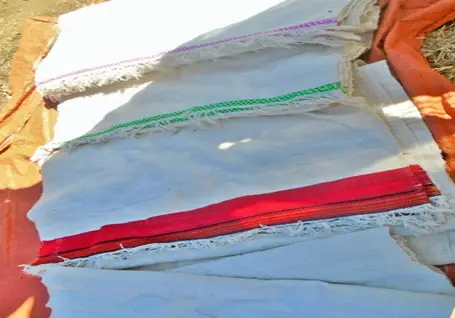
Werete Ganta Kanchama Ochole Werete Ganta Kanchama Ochole Our country Ethiopia is home to many cultures. Among these traditional twifts, weaving has a long history. Weaving is one of the most common handicrafts in our district. It is one of the most important places to practice this indigenous traditional art as a group. It is located in Ganta Kanchama Ochole kebele in Arbaminch Zurya district. In this place, which is commonly called Werete. No less than 41 weavers gather together in one place and carry out their weaving work in groups.
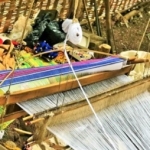
Zayse culture Afila oycho
In Zayse culture, it is a woman’s duty to be able to spin cotton. Girls start practicing from a young age. Before they get marriage, they have a custom of spinning together in groups. Traditionally, when a husband marries, she prepares the clothes she takes home with him. Thus, being able to spin cotton and prepare and make woven clothes not only makes her a professional, but also makes her a good candidate for marriage. In addition, mothers have extensive weaving experience. Its popularity is high because the society uses weaving products for various social events besides clothing. The responsibility of making cotton and cloth is a responsibility that falls on the shoulders of women. In Zayse culture, it is a woman’s duty to be able to spin cotton. Girls start practicing from a young age. Before they get marriage, they have a custom of spinning together in groups. Traditionally, when a husband marries, she prepares the clothes she takes home with him. In addition, mothers have extensive weaving experience. Its popularity is high because the society uses weaving products for various social events besides clothing. The responsibility of making cotton and cloth is a responsibility that falls on the shoulders of women.
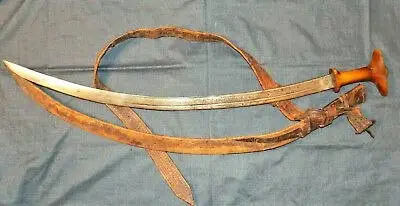
Steel work
Steel work the owners of this profession are call as ‘Mana’ in the community. The owners of the profession produce or make various tools and materials. When That are use by the community in a traditional way. When Men are involved in the metal work. The work is done by softening the metal with the power of fire. And making it artfully until it takes the desired shape. Owners of the profession explain that they have inherited it from their forefathers. We will look at some of the many metal products offered to the community as an example. So, Most of the steel products they produce are markete and sold. the experts explain that by bringing in raw materials. They can make whatever they want by order. It is say that in the past. Then They use natural stone and soil to produce the raw materials needes to produce iron products. Steel work Steel product manufacturer Wise offers a wide range of products. Whether it is for customer orders or for the market. Melting metal goes through several processes to obtain the desired product. In the same way. So, We will continue to look at those who help to produce the required utility material by melting the metal. Finally, The owner of the art in the production process.1. ArmyIt is one of the oldest traditional weapons. We understand that other traditional weapons were create and improved over time after the sword and arrived here. It is one of the many metal products make by artisans in our district. It was use to hunting in addition to fighting and fighting. Like today, before the proliferation of personal or modern weapons, the community used it well to protect itself from the attacks of various animals. 2. Sword‘Sword’ is one of the oldest handicrafts. Classify as traditional craft weapons, swords are make by blacksmiths. Just like ‘Tora’ and ‘Masha’, it is a product of handicrafts make by blacksmiths. The service of the sword is use during close and hand-to-hand combat with the enemy. Fathers explain that cavalry warriors used to fight using swords. 3. KnifeThis type of fortune-telling is of service to the mad house. It is use for chopping and peeling vegetables for cooking. Masha is a traditional knife that can be use for cutting meat or for stripping. 4. Idra Masha (Corn Lock) ‘Idra Masha’ is a forging knife which, as the name suggests, is use to prepare foraging products. The Idira masha is a knife that is prepare for this purpose, from cutting and grinding the masa to preparing the animal extract.
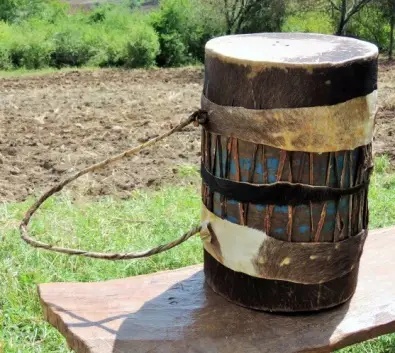
Folklore
Folklore Although it is clear that folklore is new to many when we start from the word. It is not different from the daily activities of human beings since the beginning of human existence. Mainly, it reflects our culture, tradition, and even the system in the community in different folkloric ways. Therefore, folklore is not something that is yet to be created. But it is something that we practice and practice in our daily lives.As mentioned above, many scholars have put forth interpretations of folklore.1. When I mean folk group or people2. Lore means knowledgeTherefore, when people gather together in a group. In various occasions of life, the rituals they celebrate together, celebrations, worship, weddings, birthdays, crying, baking, etc. The knowledge (art) that they create as a group in various social interactions defines the folklore. Folklore is a tool used by the society to reflect its culture and tradition in different situations, since the world has been inhabited by people since ancient times.Folklore contains 5 genres1. Vocabulary2. Conceptual art3. A/Habit4. A/Engineering5. Material cultureThese above mentioned genres refer to the folklore in the community. Oral folk lore: The phrase derived from two root words refers to the meanings of lore, beauty, and wisdom. Writing, etc., has been studied for many years. Vocabulary at the level of words from generation to generation through stories. through legends. through oral poetry. through parables. through riddles. through Enka salantya, writings on the wall, embroidery verses and laments. also through engurgurowech, wedding and funeral songs, fukera kerato, shepherd’s songs, buhe, They are stimulants, ………….etc. In addition, it is a field of folklore that studies the importance of giving the message. that message to the society about the time and period that these ancient people are still alive today. In addition, through the above-mentioned verbal activities. the community reflects the system around them, praises the chiefs, officials, kings, and teaches children the morals in the form of stories. When we look at art, the knowledge of the society is to express art in different ways through stories, poetry, reading, plays, etc. When we bring up folklore, we can bring up a wide range of issues in it. Along with this, you can look at traditional arts. A/Tun art has different characteristics and includes dance, dance, music. Music has its own poetry, beat, melody, and arrangement system, and following music, indigenous musical instruments not only make the beauty of the music attractive, but also bring people’s inner feelings with the dance. Don’t think of music as music, they are musical instruments.
Traditional Medicine Expert
Traditional medicine Expert is define as the sum total of knowledge, skills, and practices based on theories indigenous to different cultures. It is use for maintaining health as well as for the prevention, diagnosis, improvement, or treatment of physical and mental illnesses. 1, Dr./Gash = Borko Botola- A list of the medicines I know who have traveled abroad in his field many times. When Who is considere a doctor and highly respected by the local community. When they serve Cancer, Liver, Liver abscess, Head, Eye, Tooth, Ear, Stomach, Human eye, Snake bite, Fever, Stomach ache, Cut, Fever, Epilepsy, Medicine for Buddha, Asthma, Boils, Scalds, Scabies, Cattle milk to make you drink milk like a heart, Cattle human eye, Bugunj, Malaria, Typhus, Bugur …Telephone: 0926386360 2, Arbam spring area: Gamo traditional medicine expert: Dr. / Abye = Turuneh Churbo- He is known for frequently visiting various places in the field and treating people, and is highly respectes in the local community. List of medicines that I know of that are certified in the field: Cancer, Breast Cancer, Liver Cancer, Eye Cancer, Tooth Cancer, Ear Cancer, Stomach Cancer, Snake Bites, Ringworm, Stomach Pain, Epilepsy, Herbal Medicine, Hair Loss, Tonsil Cancer, Prolapsed Disc, Breast Cancer, Sore Throat, Snake Grass, Finger Swelling, Gallstones, Heart Disease, Heart Attack, Heart Attack, Heart Attack, Heart Attack, Joint Pain, Blood Cancer, Bone Cancer, Cervical Cancer, Cervical Swelling Phone: 0934532321 Traditional medicine structures of the Zaise Traditional medicine Expert is define as the sum total of knowledge, skills, and practices based on theories indigenous to different cultures. It is use for maintaining health as well as for the prevention, diagnosis, improvement, or treatment of physical and mental illnesses. 1, Ms./Dr.=Dinqnesh Diga – A list of medicines that I know, who are famous in the field, are respect and highly regard as doctors in the local community. For colds, scabies, ringworm, human eye, liver / rainbow, especially diseases that occur around the nose and eyes, snake bites, for cattle that are infects with human eyes, and for cattle that refuse milk after giving birth; 2,, Dr./Gash = Damene Tuko – A list of medicines that I know, who are respect and highly regarded as doctors in the Zaise ethnic group: Itching, snakebite, Buddha medicine, stomach ache, toothache, cattle medicine, etc. Tel: 0932976669
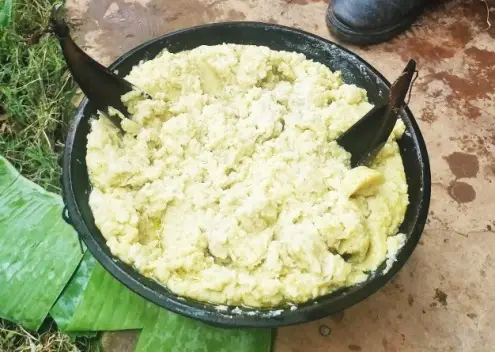
Traditional foods of the Zayse ethnic group and their methods
Traditional foods of the Zaise ethnic group and their methodsThe Zaise ethnic group has its own traditional foods. The ingredients used for the preparation of traditional foods are mostly locally produced. Due to the fact that the ethnic group has a mountainous. And mountainous climate, various sugarcane crops, legumes, roots, fruits and vegetables, as well as spices are widely grow. Since the economy of the community is based on mixed farming, animal products. Such as milk, butter, meat, cheese and eggs are use as a basic ingredient in the traditional food of the Zaise community. In addition to being a flavoring and seasoning. Traditional foods of the Zaise ethnic group and their methods Since the farmers have been keeping bees in a traditional way since ancient times. Honey is use as a medicine in the ethnic group’s food culture, according to the elders of the nation’s history. It has been tried to mention above that the ingredients needed to prepare traditional food of the Zayse ethnic group are widely produced locally. We can see the recipes of the crops grown locally and the traditional dishes prepared from them as follows: GaaGaa is one of the popular traditional foods of the Zayse ethnic group. Since many ingredients are needs to prepare Gaa, the preparation takes a long time. The ingredients needed to prepare this popular traditional food are Idira /corn/, Itimua /bula/, Acho /meat/, Dilla /corn or sorghum flour/, Doko /cabbage/ and Shailo /flat white boloke/. Before the food is prepares and serve, various spices are adds. Butter is adds hot, which adds to the taste and sweetness. Making it not only delicious to eat but also attractive to look at. Gaa is not always prepare on the day of the feast in the Zayse food culture. Rather, it is a dish prepares for holidays, weddings, when a black guest comes to the house, and other occasions. The preparation process is time-consuming and can take up to half a day. Since the preparation of Gaa requires a lot of skill, it is a traditional dish of the Zaise ethnic group that requires experience to make well. Kode Kode (porridge) is made from corn, barley or teff flour mixed with rice flour. The process is similar to boiling milk in a pot and adding the flour until it is cooked. When cooked, it is served hot with various spices and butter. Kode is often served to brides and grooms during their wedding receptions. It is also prepared as a highlight for various festivals. Kode is one of the traditional dishes that is often served on the day of the wedding. BamE BamE is a food that is prepared almost every day in the Zaise ethnic group’s food culture. The process of preparing BamE begins with chopping cabbage, which is called ‘Doko Aicho’. The chopped cabbage is mixed with necessary ingredients such as bulgogi or adenguare, potatoes and meat and stewed. The stew is kept simmering. Among the ingredients needed to prepare BamE, corn or sorghum flour is mainly needed, and it is first boiled without boiling. The process of boiling is called ‘Zeo’ in the ethnic group’s pronunciation, and the boiled flour is then boiled in small quantities. The process of boiling is called ‘BamE BamE’. The boiled BamE is added to a pot and cooked together with the boiled cabbage. Finally, when it is cooked, it is turned over and butter is added to the ‘Gonge’ in the oven. This process is known as ‘Wereke’ and is the final step in the process of making Bam. Tsuluqa The preparation and ingredients of Tsuluqa are not different from those of Buba and Bama. However, the amount of Tsuluqa is very small. This is not common compared to Bama because it takes a long time to prepare. Tsuluqa is a delicious food of the Zayse ethnic group because it is prepared with time and the ingredients are complete. Bora Bora is made from corn, teff, and sorghum flour. After the aforementioned grain is ground and fermented, it is spread on a cob leaf and spread on a pan, turned over, and when it is cooked, it is eaten using various fillings. The fillings can be raw meat, cabbage, milk, honey, etc. Bora is made at any time and served with various traditional dishes of the nation. Bora is said to have been popular among herders. Herders live in a pasture with their cattle. Animal products are their main food. Bora is easy to make and goes well with milk, making it their preferred food. Utuka Utuka is made mainly from corn or sorghum flour. The flour is kneaded and kneaded and then fried or fried. The size of utuka is much larger than the above-mentioned bam, buba and tsuluqa. The reason for this is that the food is cooked faster and the time it takes to fry is reduced, according to mothers. To prepare utuka, first, ingredients such as cabbage, potatoes, and bolokina are cooked in a ‘pot’ (a rice cooker) and then the fried utuka is added on top and cooked. Utuka is specially prepared with sega. When the bone meat is cooked, the fried utuka is added on top. It is very popular to cook it this way. When it is cooked, it is ready to eat by removing it and mixing various prepared seasonings such as garlic, ginger, and cumin with butter. Kaie Acho (Raw Meat / Cut) Raw meat is one of the most popular foods in the Zayse cuisine. It is usually eaten for festivals, weddings, reconciliation, various events, for black guests and during mourning periods. Raw meat is not only prepared to celebrate festivals and special events, but also as an obligatory part of the Zayse traditional diet. To eat raw meat, a bread called ‘bora’ is made from corn and maize or sorghum flour and is used as a dip. In addition, there are various types of pickles in the area, which are mixed with
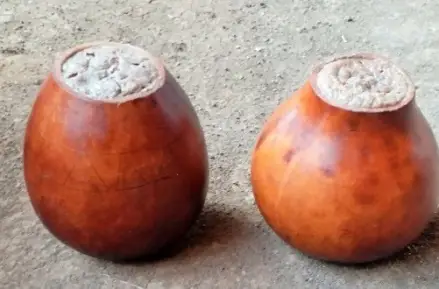
Traditional Drink of the Zayse ethnic group and their methods
The Zayse community has its own traditional drink. Traditional drinks are prepared for social occasions. Mainly for festivals, weddings, community work ‘Dago’, mourning ‘Bochocha’, days of mourning and various social events. In the Zayse community, drinking together is given a special place and meaning, just like eating together. Drinking together is a way to develop and strengthen social relationships. Regardless of gender and age, they gather together at social events and strengthen their friendship. This drinking process is known as “Aiso”. Aiso is a drinking situation where two friends drink from the same cup at the same time and in the same breath. In this way, two people show and develop their friendship when they drink together. In addition, the tradition of eating and drinking together, both in times of joy and sorrow, has been passed down from generation to generation and has reached the present day. There are various traditional drinks in the Zayse community, and we will see them as follows. Modo (Borde) ‘Modo’ is an ancient traditional drink of the Zayse ethnicity. It is made from corn and sorghum flour and malt is added. This is called ‘Mase Modo’. Modo, which is prepared through several processes, is said to be popular. When we look at the process of preparing Modo, first the sorghum flour is ground and boiled in water. The curd that is made in water is called ‘samosa’ in Zayse. When the boiling process is complete and it is confirmed that it is cooked, it is taken out of the huge boiling pot and served with a wide plate. A wooden masha called ‘Samusa Pule’ is used to make the kurkufa easier to break and knead. When the kneading process is complete, it is kept indoors to allow air to circulate. It is then kneaded. The next day, it is placed in a jar and the mouth is closed, and a mixture made from sorghum or corn flour mixed with boiling water is added to it and left in the jar until it reaches a soft consistency. It is kneaded after two to three days, depending on the weather. Then it is served according to the user’s preference, while kneading it with hot water. Since Modo is made with a thick consistency, it is also consumed as a drink. Modo is usually prepared for weddings and festivals, and during mourning, it is prepared and taken to the house of the deceased, which is called “bochocha”. In addition to being a drink, Modo is also used to comfort the mourner and to entertain guests who have come to mourn. It is widely prepared for festivals, social events such as feasts and feasts. In addition, it is also prepared for sale and offered in the market. The content and taste of Modo are considered important, and when ingredients that enhance the taste such as cabbage and fenugreek are added to the prepared grain, its popularity increases. There are types of Modo made from barley, corn, and other grains without malt. Kayla /Shda Modo/ Shda Modo, as the name suggests, literally means ‘Shda Modo’ /Honey Borde’. Modo is a popular traditional drink prepared by mixing honey with well-prepared ingredients. Kayla is a traditional drink that is highly appreciated by the Zayse community because it contains honey. Like Modo, Kayla is prepared for various social occasions and is served to elders, fathers, and guests.