Pottery is one of the most popular crafts in our district. The sages have been producing clay products that provide various services to the society since ancient times. The expert explain that various clay products. Products make in the traditional way have been hand down from father to son since ancient times and reache today. The professionals are their permanent livelihood and do not engage in farming except occasionally. They call their Midogumu their livelihood by selling the various clay products they produce in the local markets. Pottery Occasionally they produce to order. The soil used for pottery is select and filtered from unnecessary impurities before grinding. It is then traditionally ground to crush. When it is thoroughly dry, it is covere with water and keeet for two to three days. Women are involved in this work.
Borde Gane
This type of work requires experience and perseverance. The process can take days to weeks from start to finish. When finishe, it is fire like other clay products to give it strength. ‘Borde gan’ as the name suggests, the service is mostly use by Borde for baptism. The largest Modo Ota has a capacity of over 100 liters. The smaller ones serve as a refrigerator by cooling the water. The water that is pump for drinking is turn over and cool down to be use for drinking. Due to careful handling, a single device can serve up to 20 years.

 Diste
Diste
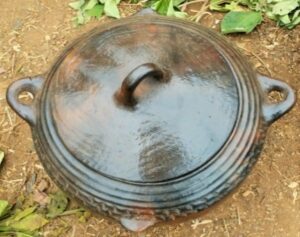
A pot is use to prepare food. ‘Diste’ is derives from the Amharic name for pot and is make by local artisans. The origin of the design is believe to be in the Menelik era. The community uses it alongside atta, especially to make stew.


Wanca
A bathhouse is a traditional bar where traditional drinks are consum. Cup traditional drinks are servse. Drinks are served and drunk at social events such as weddings, festivals, and festivals. Cups are mostly a drink for adults, while young people drink from a drink made from a horn. Craft by skill potters, the cup has a handle and is carefully craft for easy storage. The cup, which is design to widen around the stomach and narrow to the mouth, can hold up to half a liter.



Killinge
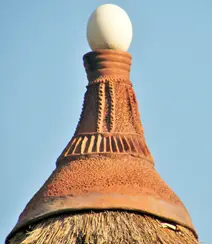
‘Killinge’ is an ornament place on top of a traditional house of the Zaise ethnic group call as Kara Kese. The Zaises have a traditional house called ‘Kara Kes’ which is very beautiful and takes a lot of time and resources to build. On the outside of this house is a decoration called kilinge. Traditionally make by skillpotters. An ostrich egg is place on top of ‘guch ጱpile’. The system is widen at the beginning and narrows towards the top to make it convenient for the laying of the egg. Various shapes and decorations are make on it to beautify it. Killinge plays an important role in preventing rain from entering the roof of the house beyond beauty.