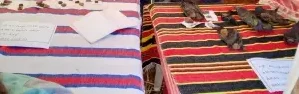
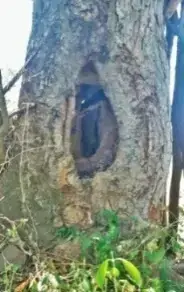
The tree under which Kat Xona ruledThe tree under which Kat Tsona ruled is a ‘Dondo’ warka, located near the Zaise Dembile Kebele Administration Office. After the death of his father / ascension /, Kat Tsona became king in 1955 AD, and the historical warka tree under which he ruled is still there today.
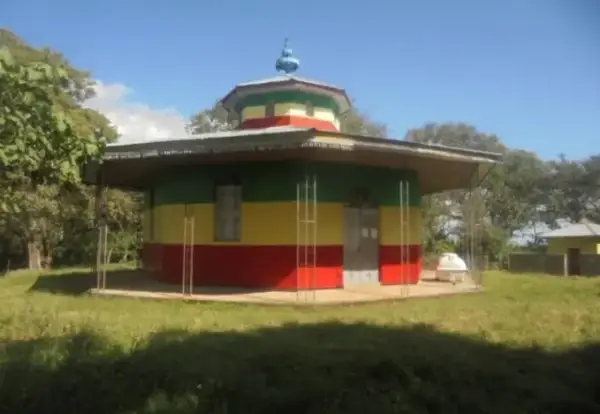
Zayse Holy Kidane Mihret Church
Zaise Holy Kidane Mihret Church Orthodox Tewahedo Christianity was introduced to Zaise in 1893 AD, and the first church to be established was the Holy Kidane Mihret Church. The church was built in Kaibene, which was the administrative center of Zaise at the time. It is now a new building, and it is said that the previous one was built with a special design using local building materials. The history of the origin and establishment of the church has a positive historical background with the people of Zaise and the central government led by Menelik II. Let us briefly look at the history of the origin of the church, which was the beginning of the introduction of Orthodoxy to Zaise. The Zaise administrative region was annexed to the central government and Kat Khama Lemnilik ruled Zaise in 1893. A man named Tino Samale from Birgushe found lion cubs and took them to the king. Tino was a Tatar farmer, cattle breeder, beekeeper, hunter, and brave man, according to his son, Tino. One day, while hunting in a densely forested area called ‘Bade Boche’, he found three lion cubs without their mother. Since the cubs were still young, he carefully carried them home by their clothes. The process was not easy, his son explains. The mother had left her cubs and gone hunting, so when they heard the movement, they thought their mother had come. This time, Tino found them. The way he returned home with the cattle was to delay the disease so that it would not reach him. The method was to create a fire and burn the grass around it so that the smell was not noticeable. He took it home and kept it in the barn, fed it with meat and milk, and after keeping it for a few days, he would inform Kat Kama and take it to Martha. In the Zayse community, when a specially fattened cattle, azart, material, sword, spear. And any other thing that could be of special importance and could be given as a gift. It was given to the king as a gift. The system is called “Yeso” in the nation and after receiving the gift. The king would bless him by saying, ‘Bira Ades Ne Edes Bish Bir Ada’ because you have given the best. Accordingly, Tino Samale presented the cattle to the king as a gift. The Debolos drink milk and eat meat and stay with the king. When Menelik’s officials who were in the area returned to Shewa. They told Menelik II that there was a king in the Zaise area who was loved and respected by the people. Along with the Debolos’ Tark. Menelik was surprised by what he heard and wanted to see the king and ordered his officials to bring them. Menelik’s officials explained the situation to Kat Khama and took some of the king’s advisors. Including Tino Samale, with them and went to Addis Ababa in December 1893. When they left, they brought lion debolos, ivory. And incense called Banja as gifts for the king and presented them to King Menelik at his palace. The king was very happy and surprised by the gift, and in response. He offered the Holy Kidane Mercy Tablet as a gift, saying,. “If I give you anything else, it will not benefit you, so I will give you an ark.” The Holy Kidane Mercy Tablet was also accepted as a gift among all the other tablets. Kat Khama, accepting the gift, returned to Zaise in March with the priests and priests’ servants. Who performed the religious ceremony and left her tablet in a tent in the courtyard of her palace. Huwala built six chapels in 1894. The church began to provide regular church education and services from 1895. Thus, the Orthodox Tewahedo faith entered Zaise. It remained the only religious institution until the 1950s. It attracted many followers, spread religious teachings, and celebrated religious festivals with great enthusiasm. After the 1950s, the number of believers began to decline. The reason for this is that Protestant Christianity began to be preached in Zayse and many people moved there. Originally built in a traditional style, it was rebuilt in a new form in 1999. Tino Samale was also given a gift by Menelik II, according to his son. He was awarded a turban and a bolale, but when he died in August 1957, he was buried with them. He regretted that it was done without his knowledge, but it should have been kept as a heritage.
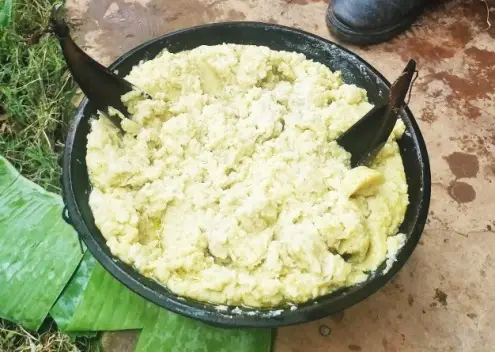
Traditional foods of the Zayse ethnic group and their methods
Traditional foods of the Zaise ethnic group and their methodsThe Zaise ethnic group has its own traditional foods. The ingredients used for the preparation of traditional foods are mostly locally produced. Due to the fact that the ethnic group has a mountainous. And mountainous climate, various sugarcane crops, legumes, roots, fruits and vegetables, as well as spices are widely grow. Since the economy of the community is based on mixed farming, animal products. Such as milk, butter, meat, cheese and eggs are use as a basic ingredient in the traditional food of the Zaise community. In addition to being a flavoring and seasoning. Traditional foods of the Zaise ethnic group and their methods Since the farmers have been keeping bees in a traditional way since ancient times. Honey is use as a medicine in the ethnic group’s food culture, according to the elders of the nation’s history. It has been tried to mention above that the ingredients needed to prepare traditional food of the Zayse ethnic group are widely produced locally. We can see the recipes of the crops grown locally and the traditional dishes prepared from them as follows: GaaGaa is one of the popular traditional foods of the Zayse ethnic group. Since many ingredients are needs to prepare Gaa, the preparation takes a long time. The ingredients needed to prepare this popular traditional food are Idira /corn/, Itimua /bula/, Acho /meat/, Dilla /corn or sorghum flour/, Doko /cabbage/ and Shailo /flat white boloke/. Before the food is prepares and serve, various spices are adds. Butter is adds hot, which adds to the taste and sweetness. Making it not only delicious to eat but also attractive to look at. Gaa is not always prepare on the day of the feast in the Zayse food culture. Rather, it is a dish prepares for holidays, weddings, when a black guest comes to the house, and other occasions. The preparation process is time-consuming and can take up to half a day. Since the preparation of Gaa requires a lot of skill, it is a traditional dish of the Zaise ethnic group that requires experience to make well. Kode Kode (porridge) is made from corn, barley or teff flour mixed with rice flour. The process is similar to boiling milk in a pot and adding the flour until it is cooked. When cooked, it is served hot with various spices and butter. Kode is often served to brides and grooms during their wedding receptions. It is also prepared as a highlight for various festivals. Kode is one of the traditional dishes that is often served on the day of the wedding. BamE BamE is a food that is prepared almost every day in the Zaise ethnic group’s food culture. The process of preparing BamE begins with chopping cabbage, which is called ‘Doko Aicho’. The chopped cabbage is mixed with necessary ingredients such as bulgogi or adenguare, potatoes and meat and stewed. The stew is kept simmering. Among the ingredients needed to prepare BamE, corn or sorghum flour is mainly needed, and it is first boiled without boiling. The process of boiling is called ‘Zeo’ in the ethnic group’s pronunciation, and the boiled flour is then boiled in small quantities. The process of boiling is called ‘BamE BamE’. The boiled BamE is added to a pot and cooked together with the boiled cabbage. Finally, when it is cooked, it is turned over and butter is added to the ‘Gonge’ in the oven. This process is known as ‘Wereke’ and is the final step in the process of making Bam. Tsuluqa The preparation and ingredients of Tsuluqa are not different from those of Buba and Bama. However, the amount of Tsuluqa is very small. This is not common compared to Bama because it takes a long time to prepare. Tsuluqa is a delicious food of the Zayse ethnic group because it is prepared with time and the ingredients are complete. Bora Bora is made from corn, teff, and sorghum flour. After the aforementioned grain is ground and fermented, it is spread on a cob leaf and spread on a pan, turned over, and when it is cooked, it is eaten using various fillings. The fillings can be raw meat, cabbage, milk, honey, etc. Bora is made at any time and served with various traditional dishes of the nation. Bora is said to have been popular among herders. Herders live in a pasture with their cattle. Animal products are their main food. Bora is easy to make and goes well with milk, making it their preferred food. Utuka Utuka is made mainly from corn or sorghum flour. The flour is kneaded and kneaded and then fried or fried. The size of utuka is much larger than the above-mentioned bam, buba and tsuluqa. The reason for this is that the food is cooked faster and the time it takes to fry is reduced, according to mothers. To prepare utuka, first, ingredients such as cabbage, potatoes, and bolokina are cooked in a ‘pot’ (a rice cooker) and then the fried utuka is added on top and cooked. Utuka is specially prepared with sega. When the bone meat is cooked, the fried utuka is added on top. It is very popular to cook it this way. When it is cooked, it is ready to eat by removing it and mixing various prepared seasonings such as garlic, ginger, and cumin with butter. Kaie Acho (Raw Meat / Cut) Raw meat is one of the most popular foods in the Zayse cuisine. It is usually eaten for festivals, weddings, reconciliation, various events, for black guests and during mourning periods. Raw meat is not only prepared to celebrate festivals and special events, but also as an obligatory part of the Zayse traditional diet. To eat raw meat, a bread called ‘bora’ is made from corn and maize or sorghum flour and is used as a dip. In addition, there are various types of pickles in the area, which are mixed with
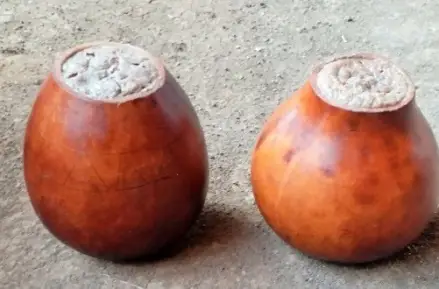
Traditional Drink of the Zayse ethnic group and their methods
The Zayse community has its own traditional drink. Traditional drinks are prepared for social occasions. Mainly for festivals, weddings, community work ‘Dago’, mourning ‘Bochocha’, days of mourning and various social events. In the Zayse community, drinking together is given a special place and meaning, just like eating together. Drinking together is a way to develop and strengthen social relationships. Regardless of gender and age, they gather together at social events and strengthen their friendship. This drinking process is known as “Aiso”. Aiso is a drinking situation where two friends drink from the same cup at the same time and in the same breath. In this way, two people show and develop their friendship when they drink together. In addition, the tradition of eating and drinking together, both in times of joy and sorrow, has been passed down from generation to generation and has reached the present day. There are various traditional drinks in the Zayse community, and we will see them as follows. Modo (Borde) ‘Modo’ is an ancient traditional drink of the Zayse ethnicity. It is made from corn and sorghum flour and malt is added. This is called ‘Mase Modo’. Modo, which is prepared through several processes, is said to be popular. When we look at the process of preparing Modo, first the sorghum flour is ground and boiled in water. The curd that is made in water is called ‘samosa’ in Zayse. When the boiling process is complete and it is confirmed that it is cooked, it is taken out of the huge boiling pot and served with a wide plate. A wooden masha called ‘Samusa Pule’ is used to make the kurkufa easier to break and knead. When the kneading process is complete, it is kept indoors to allow air to circulate. It is then kneaded. The next day, it is placed in a jar and the mouth is closed, and a mixture made from sorghum or corn flour mixed with boiling water is added to it and left in the jar until it reaches a soft consistency. It is kneaded after two to three days, depending on the weather. Then it is served according to the user’s preference, while kneading it with hot water. Since Modo is made with a thick consistency, it is also consumed as a drink. Modo is usually prepared for weddings and festivals, and during mourning, it is prepared and taken to the house of the deceased, which is called “bochocha”. In addition to being a drink, Modo is also used to comfort the mourner and to entertain guests who have come to mourn. It is widely prepared for festivals, social events such as feasts and feasts. In addition, it is also prepared for sale and offered in the market. The content and taste of Modo are considered important, and when ingredients that enhance the taste such as cabbage and fenugreek are added to the prepared grain, its popularity increases. There are types of Modo made from barley, corn, and other grains without malt. Kayla /Shda Modo/ Shda Modo, as the name suggests, literally means ‘Shda Modo’ /Honey Borde’. Modo is a popular traditional drink prepared by mixing honey with well-prepared ingredients. Kayla is a traditional drink that is highly appreciated by the Zayse community because it contains honey. Like Modo, Kayla is prepared for various social occasions and is served to elders, fathers, and guests.
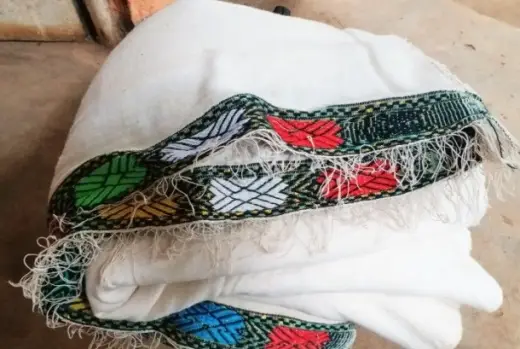
Traditional clothing produced by the Zayse Shema artisans
Meo (single) ‘Natsala’ is divided into two, the first is called ‘Hatche Natsala’ and the second is called ‘Kuche Natsala’. Hatche Natsala is slightly higher than Kuche Natsala. It is worn by men. It is worn by men on their shoulders for mourning, reconciliation, festivals and other social occasions. The second is known as Kuche Natsala and is slightly smaller. Kuche Natsala, worn by women, is worn by mothers on their shoulders for various social occasions. Gabe (Artistic Gabe) ‘Tsibabe Gabe’ as the name suggests, is not a standard pattern of the Gabe, but a special design that is being selected by the weaver. The art of weaving the Gabe and the special design require knowledge and experience and take a long time to complete. In this way, the popularity of the Gabe made with special designs is high. It is a popular handicraft of the Zaise community that is chosen and worn on various social occasions. Buluko Buluko is one of the most famous traditional costumes of the Zayse ethnic group. It is made using traditional weaving and the main raw material for making Buluko is cotton, especially Habesha cotton. It is embroidered with red at the end. Red embroidery was common in the past because it was easy to find. Therefore, the experts explain that the use of red embroidery in making Buluko has remained a tradition until now. It takes a long time and a lot of effort to make Buluko. A woman who has spun cotton for a long time and made Buluko is famous and has a high reputation. She is also seen as a professional and has a special place in her community and surroundings. In the past, when the Buluko was finished, the woman’s family would slaughter a goat or sheep according to their means. A bulukko is eight to twelve cubits long and four cubits wide, and is made of cotton, white in color, and finished with a red pattern. The weaver also spends a lot of time and effort on it, so it costs more than a regular gaby. The bulukko, which takes a long time to make, serves various purposes, mainly as a garment. It is worn by fathers on various festivals and social occasions, including weddings. Women also appear prominently on various social occasions, and the dress worn by the bulukko is known as the ‘danche mao’. One of the services provided by the bulukko is to be worn when someone dies.
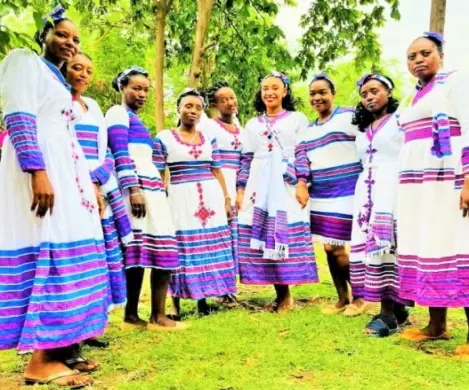
Zayse Ethnic Clothing
Danche Mao Buluko is a traditional garment called ‘Danche Mao’. Buluko requires a lot of time and effort from artisans. Since it requires a lot of fabric and yarn to make, it is made with extensive preparation. Therefore, the type of garment that is worn with a buluko that takes a lot of effort and is made in this way is called Danche Mao. It is said to be a popular garment worn by Zaise women, especially mothers. The buluko is worn by tying it around the waist and covering it up to the ankles. It is then worn over the waist and is a traditional garment worn for festivals and various social events. Danche Mao got its name because it is tied around the waist with a ‘danche’ /mekenet/. Zaise Pizzo in Modern Design The Zaise Pizzo is currently being used in a modern way by designers. Pizzo is the traditional clothing of the Zaise people and is considered a symbol of the nation. The three colors on the pizzo have their own meanings. The colors are blue, red and white, and the interpretation is as follows. The blue color refers to or represents Chamo Bagade (Chamo Lake), which is a natural resource of the community, which is pure and blue. The red color represents the sacrifices made by the Zaise people to preserve their identity and territorial integrity. The white color represents Zaise as a cotton producer, which is why Zaise is called ‘Zaise Futa Dure’ in neighboring states, and it also represents the peace, unity, and tolerance that all Ethiopians live in. Next, we will look at the clothes made by designers in a modern way. Shinshine (dress) ‘Shinshine’ is a traditional and beloved dress worn by Zaise women, especially a full dress worn by mothers. The sleeves of the shinshine are short or full, and the length usually reaches the ankles. Currently, the shinshine made by Zaise Pizo is popular with both young women and mothers. Designers who work in different designs have been increasing due to consumer demand. The clothes they make are suitable for different events and different weather conditions. Zaise Pizzo, which is made for various occasions including weddings, birthdays, graduations, has become a community value that defines the nation at the national and international levels. In this way, the community is decorating its own artistic heritage that expresses its culture, identity, and history. The role played by the Zaise youth in promoting Pizzo is not easy. Although local government bodies have imposed restrictions on young people wearing Pizzo and entering various cities, they have not succeeded. The role they have played in making the Zaise Pizzo known nationwide by making and wearing it is undeniable. The Zaise Pizzo, which has been growing over time, has become a popular traditional garment beyond Zaise and has become a nationally popular traditional garment. Pizzo is made for young women and men in the form of sweaters and t-shirts. It is made by modern designers and is popular among young people. Young people wear similar /match/ for various programs and events. It is popular among young people in Zayse and is widely worn, being made in various designs. Men’s Full Suit in Pizzo One of the ways we see and understand the Zaisen Pizzo is the men’s full suit. Pizzo is one of the areas where modern designers are making it widely available. It is usually made for formal wear. Representatives of the nation are wearing it at various government meetings, various levels of the House of People’s Representatives and other events. In this way, traditional clothing is a reflection and identity of a community, and it is also a symbol of the nation. Pizzo for children Now, Pizzo, which is being made in a modern way by various designers, is becoming increasingly popular. It is becoming increasingly popular not only among adults but also among children. Thus, when children celebrate their birthdays, they are being made by professionals with special designs. The parents of the children also make them for their birthdays. In such cases, it is encouraged to use our own traditional clothes. It is self-evident. Especially in recent times, Pizzo clothes made in a modern way by designers have become increasingly popular. This should be encouraged and continued. Zaise Warrior Costume In the past, traditional Zaise warriors wore a variety of weapons to defend their community from various attacks. The main ones were swords, spears, shields, daggers, and a lance. The lance is a warrior’s cloak made from various animal skins. It is made from various animal skins, with lion and leopard skins being particularly popular. After completing all of the above, Zaise warriors would drape a lance over their shoulders. The traditional clothing of the Zaise people has gone through various stages of development since ancient times and has reached the level it is today. For the Zaise people, traditional clothing has a role beyond covering the body and protecting them from the cold. It is worn as a dress of honor for weddings, funerals, festivals, and other social events. It has also served as a warrior’s dress on the battlefield. Brides have seen their world with grace and beauty. So, the traditional clothing, which is the result of the artisans of the Zaise community, has been the greatest gift of all gifts to this day. It is given to the deceased family by relatives during mourning, given as a gift by parents when their children are buried, and given as a reward when children graduate from school. It is a cultural value of the community that has been passed down from generation to generation. Traditional clothing is currently being designed in a modern way by designers in various ways, and is being prepared and offered to users of both genders and all ages according to the needs of the user. This is encouraging and encouraging, especially for the youth to know and use their culture and to inform others. The