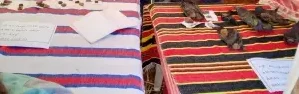
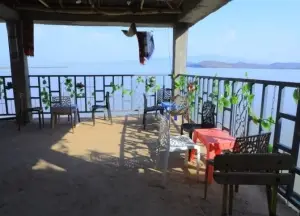
Chamo Lake Special Recreation Association was founded in 2008 by 3 women and 2 men with an initial capital of 100,000 birr. Currently, the association is operating and creating employment opportunities for 14 men and 11 women. The services provided by Chamo Lake Special Recreation Services mainly include boat trips around Chamo Lake, wedding and birthday services, and fish meal preparation. Chamo Lake Special Recreation Association was founded in 2008 by 3 women and 2 men with an initial capital of 100,000 birr. Currently, the association is operating and creating employment opportunities for 14 men and 11 women. The services provided by Chamo Lake Special Recreation Services mainly include boat trips around Chamo Lake, wedding and birthday services, and fish meal preparation.
Leto Fishermen’s Association
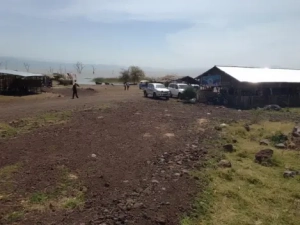
Leto Fishermen’s Association the site is located 13 km from Arba Minch town, on the banks of Lake Chamo in Ganta Kanchama Ochole Kebele. And Leto is said to be the name of the locality. The association has 50 males and 10 females. And in the years before 2007 the fish was distributed to the merchant after it was taken out of the lake. In 2007, people came and used it. And when the number of users gradually increased. They decided to organize themselves in an association and started providing services to visitors by providing fresh fish.Services provided to the communityLeto Fishermen’s Association. A boat/zatra tour service on the shores of Chamo Lake, fresh fish products. Koda/Koroso, white fish, carp, ambaza, barbus, bandra… are sold by the kilo according to the individual’s needs. If you want to eat on the spot, the above-mentioned fish products are available to visitors: fish cutlets, fish fillets, fish fry/posose, fish green fry, fish sauce and soup, fish cutlets… The association has an estimated capital of 700,000 to 1,000,000. In the future, a design has been drawn up and implemented in collaboration with Arba Minch University to develop the shores of the lake in a modern way, and some items are also being imported. It is believed that this grand plan, when completed, will make a significant contribution to the national tourist flow beyond the district.
Lake Chamo
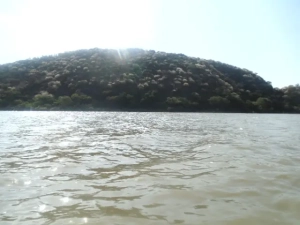
Lake Chamo Located in Arba Minch Zuria Woreda in Gamo Zone, this lake was formed from the many rift valley lakes, which are filles with water 20 million years ago during the Cenozoic Era following the heavy rains that fell on the world during the ‘Pulvian Rains’. After that, the global temperature increased for several years following the rains, and the water level of the lake decreased due to evaporation, which led to its current appearance, according to various researchers. The history of Chamo Lake is not far from this. It can be see that the areas and kebeles covers with land were also part of Chamo Lake. For example, the lower part of Ganta Kanchama Ochole Kebele, Shele Mela, Kola Shele, Zeise Elgo, Zeise Wozeka, and the lowlands of Gumaide and Amaro were coveres by the lake. It is bordered by The Amaro Mountains and Gumaide Hills in the south, the Egzer Bridge in the east, the Bechisar Beherwi Park in the northeast, and Genta Kanchama, Shele Mela, Zeise Algo, and Zeise Wozeka in the northwest. General description of Chamo LakeLength 32 kmWidth (average) 13Total area 317 km²Depth (average) 14 meters The lake contains various fish species, crocodiles, and hippos. Among these, there are various fish species, but only a few are Needs for food due to their taste. The fish species that are most popular and frequently consumed by consumers are koroso (coda), tilapia, white fish (Nile perch), kerkro, barbo and ambaza, according to the lake’s fish consumers and fishermen.Of the fish species listed above, koroso, commonly known as koda, is the most preferred fish species in terms of both price and taste, according to the consumers, fishermen and fishermen. In addition, white fish is relatively larger than other fish species in the lake, weighing up to 80 kg, and its price is also higher than other fish species, according to the consumers, fishermen and fishermen. When you see crocodiles basking on the shores of Lake Chamo in the morning and evening, and the birds trying to feed from the crocodiles’ mouths, you realize how unique the area is. The lake is home to a species of crocodile known as the Nile crocodile. One of which can grow up to 7 meters long and whose skin can be use as foreign currency. The lake serves as a shelter not only for crocodiles and fish, but also for hippos. In addition, many species of birds, including pelicans and flamingos, and crows and egrets, which are found only in Ethiopia, can be found along the shore of the lake.
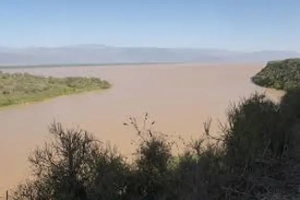
Lake Abaya
Lake Abaya This lake, which is one of the tourist attractions in the Arba Minch district of Gamo Zone, was forms like any other rift valley lake. Which was forms 20 million years ago during the Cenozoic Era following the heavy rains (Pluvial) that fell on the world. After that, the temperature increased for several years following the rains, and the water level of the lake decreased due to evaporation, according to various researchers. The history of Abaya Lake is not far from this. It can be see that the land-coveres areas and kebeles were part of Abaya Lake. For example, it can be seen that the western Abaya lowland kebeles including Arba Minch Airport, Kolashara, Chano Chalaba, Chano Mile, Lante, Omo Lante, and Ankober were covered by the lake.General description of Lake AbayaLength 60kmWidth (average) 20mkTotal area 1162 sq kmDepth (average) 13.1 mElevation 1285 m The red or turbid water of Lake Abaya may have turned red due to the influence of the land on which it lies and the local river. This lake, which is un match in terms of width and length among the lakes in the Rift Valley, contains several islands. Among these are Gidicho Island, where the Gidicho ethnic group lives, and the islands in the lake, including Guzuf Aruro, Welegye, Galamaro, Golmaka, and Alkali. The main rivers that feed the lake are the Blate, Hamasa and Kulufo rivers, while many smaller rivers such as Haren feed the lake. This lake is home to a wide variety of fish species, including crocodiles and hippos. However, fishermen who have worked in the two lakes say that the fish and aquatic life are less diverse than Lake Chamo.If the lake is provided with boat transport services, it can be a good option for transportation services to Sidama, Hawassa and its surroundings, including Gedeo zone.
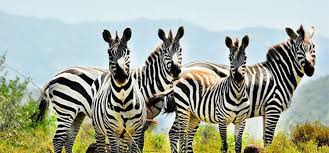
Neche Sar National Park
Neche Sar National Park which is one of the national parks in Ethiopia. Is one of the leading tourist destinations in Gamo Zone and Woreda. The Neche Sar National Park, which got its name from the Sar river in it. Is known for its unique natural resources and is very attractive, attracting many foreign and domestic tourists every year.General description of the parkArea 514 sq. km.Water body of the park 15% Abaya and Chamo.Altitude 1108-1650 above sea level.Established in 1966 AD.Mammals 100 species.Birds 351 species.The following are the main natural resources of the Neche Sar National Park.
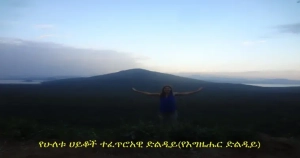
Egzer Dildiye
Egzer Dildiye is a mountain located between the two lakes, Abay and Chamon. The place is located between the two lakes, and its natural setting and topography are attractive. Standing on the top of the mountain, you can see the two lakes to the left and right. The place is a wonderful place to separate the two lakes and serves as a passage to Amaro and Guj from Arbaminch and the surrounding area. This place, which is 1628 meters above sea level, is part of the White Grass National Park.
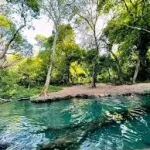
The Forty Springs
The Forty Springs the Famous Spring in Arba Minch. Arba Minch is a natural spring from which the city got its name and also serves as a source of drinking water for the city. Not only because of the many springs in one place. But also because the area is covered in natural forest. It is said to be one of the favorite places visited by tourists in the White Grass Park. Since Arba Minch is close to the city and the area is attractive. It can be seen that the city’s residents go there to relax, swim and have fun. Especially on weekends, the area is crowded with people. The spring water that flows from the water service passes through the surrounding forest. And joins the Kulufon River, ending at the foot of the mountain.
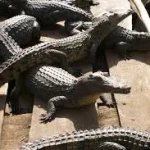
Arba Minch Crocodile Breeding Station
Arba Minch Crocodile Breeding Station which is said to be the only one in East Africa, was established in 1984. With the main objective of utilizing the abundant crocodile resources in Chamo and Lake Abaya. This facility, which has been in operation for many years. It is located 7 km from Arba Minch town in our woreda. And mainly generates a large amount of foreign exchange by exporting crocodile skins to the foreign market. The previous breeding station was flooded by Lake Abaya, and the new facility, which was built in a new form, has created a convenient opportunity for crocodiles to be divided into age groups and raised. The crocodiles are 3 years old and their skin is in demand. As they age, the quality of the skin decreases. This unique crocodile breeding facility in East Africa is visited by many local and foreign tourists.
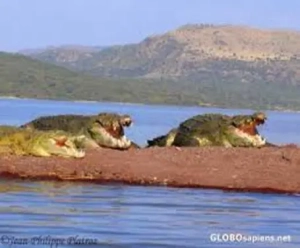
Crocodile Market
The Crocodile Market is located on the shores of Lake Chamo in the White Grass Park region. The Crocodile Market is commonly known as the Crocodile Market because many crocodiles are seen basking on the shore. Crocodiles open their mouths when they are basking in the sun, and watching birds eat the fish meat in their teeth makes us think deeply about the connection between nature. The crocodile in Lake Chamo is a species of crocodile that can grow up to seven meters long.
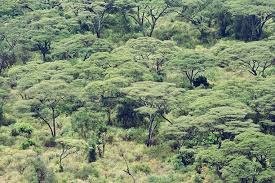
Arba Minch Natural Forest
Arba Minch Natural Forest known as Ground water forest, is located at the foot of Arba Minch town, along the banks of the Abaya River, between the Egzer Bridge and Chamo Lake. What makes this forest unique is the Arba Minch springs. From which the town of Arba Minch gets its name, and the Chamo Lake, which is crosses by the Kulufo River. These springs and the Kulufo River form a stream and flow into Chamo Lake. The water bodies play a major role in the growth and expansion of the forest’s biodiversity. This natural forest contains tall trees up to 60 meters tall and has three levels, so the sunlight cannot reach the ground. The forest is home to many mammals and reptiles, including many monkeys, monkeys, and cheetahs.