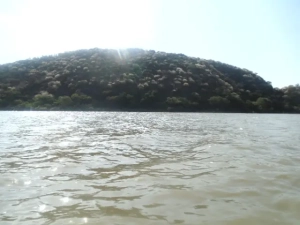
Lake Chamo Located in Arba Minch Zuria Woreda in Gamo Zone, this lake was formed from the many rift valley lakes, which are filles with water 20 million years ago during the Cenozoic Era following the heavy rains that fell on the world during the ‘Pulvian Rains’. After that, the global temperature increased for several years following the rains, and the water level of the lake decreased due to evaporation, which led to its current appearance, according to various researchers.
The history of Chamo Lake is not far from this. It can be see that the areas and kebeles covers with land were also part of Chamo Lake. For example, the lower part of Ganta Kanchama Ochole Kebele, Shele Mela, Kola Shele, Zeise Elgo, Zeise Wozeka, and the lowlands of Gumaide and Amaro were coveres by the lake. It is bordered by The Amaro Mountains and Gumaide Hills in the south, the Egzer Bridge in the east, the Bechisar Beherwi Park in the northeast, and Genta Kanchama, Shele Mela, Zeise Algo, and Zeise Wozeka in the northwest.
General description of Chamo Lake
Length 32 km
Width (average) 13
Total area 317 km²
Depth (average) 14 meters
The lake contains various fish species, crocodiles, and hippos. Among these, there are various fish species, but only a few are Needs for food due to their taste. The fish species that are most popular and frequently consumed by consumers are koroso (coda), tilapia, white fish (Nile perch), kerkro, barbo and ambaza, according to the lake’s fish consumers and fishermen.
Of the fish species listed above, koroso, commonly known as koda, is the most preferred fish species in terms of both price and taste, according to the consumers, fishermen and fishermen. In addition, white fish is relatively larger than other fish species in the lake, weighing up to 80 kg, and its price is also higher than other fish species, according to the consumers, fishermen and fishermen.

When you see crocodiles basking on the shores of Lake Chamo in the morning and evening, and the birds trying to feed from the crocodiles’ mouths, you realize how unique the area is. The lake is home to a species of crocodile known as the Nile crocodile. One of which can grow up to 7 meters long and whose skin can be use as foreign currency. The lake serves as a shelter not only for crocodiles and fish, but also for hippos. In addition, many species of birds, including pelicans and flamingos, and crows and egrets, which are found only in Ethiopia, can be found along the shore of the lake.


