
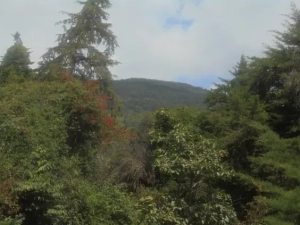
The artificial dense forest of Dega Ocholo the fact that forests. And humans are closely links is an indication of the damage causes by climate change and the negative impact it is having on humanity. The climate change that is currently affecting countries from developed to developing countries. That is mainly cause by greenhouse gases release by industries, and industrialized countries are primarily responsible for this. However, as the climate crisis is worsening from time to time. Countries have taken various measures to find a solution to this problem. But because it has not been done sufficiently. The problem has worsened and is causing many damages in different parts of the world, such as droughts and floods. The countries that account for the lion’s share of this climate change have been trying to find a solution by holding various meetings. Africa, which is not considers to be a significant contributor to climate change, is the leading country. The artificial dense forest of Dega Ocholo Apart from greenhouse gases, deforestation is also consider a major cause of climate change. Plants use carbon dioxide to produce oxygen. The oxygen produced is also very important for humans and animals. Therefore, it is essential for humans and other animals to be connectes to forests. Understanding this, humans have been focusing on the development of natural forests and have been using and developing forests. However, as the human population has increased over time, the demand for forest resources for agricultural land, housing, and construction has increased significantly. This increase in demand has led to rapid deforestation. Various governments have taken several steps to prevent deforestation. The green development program has been implemented in various countries. Many African countries have adopted green development as an alternative to protect themselves from drought and climate change. Green development plans and strategies often include afforestation and tree plantations, which are renewable energy sources that reduce deforestation and restore degraded areas by planting trees.The African continent ranks first among the continents that are not industrialize. Its contribution to climate change through greenhouse gas emissions is not insignificant. However, it is the continent that is most affected by climate change. For this, the recent drought that occurred on the continent can be cite. This drought has caused drought in many African countries, causing many people to starve and many animals to death. Our country, Ethiopia, is one of the African countries that has experienced the worst of the problem and is one of the countries that contributes the least to greenhouse gas emissions. It is implementing various strategies to cope with the climate change that has occurred.Arba Minch Zuria Woreda is a district that has adopted and implemented a green development policy. To achieve this strategy, various activities have been implemente. For example, watershed development, planting saplings on bare lands, protecting forest and plant-covers areas from animal attacks, and protecting and caring for forests areas from disasters are mentions. In this article, in addition to protecting and caring for the environment. An artificial forest that can be a tourist attraction is located in Dega Ocholo Kebele in Arba Minch Zuria Woreda. Local residents say that this artificial forest locates in Dega Acholo Kebele in Arba Minch Zuria Woreda was planta during the Derg regime. This man-made forest, locates 25 kilometers from Arba Minch. Is found when you finish Chano Dorgan Kebele and start Dega Ocholo Kebele. It creates a beautiful landscape on the way from Arba Minch to Encha. The old trees of Sede, Gravila, Warka and Eucalyptus trees, reaching up to 40 meters in height, are breathtaking. This beautiful forest, which extends from the lower sub-kebele of Dega Ocholo to the Dorzewa Kejelcha Kebele, is old and beautiful. The trees that cover the area and are mostly Seed species. In addition to Eucalyptus and Warka, and other indigenous trees that are occasionally see, have not being notice. If the forest is developed and promoted, and if parks and recreation eco-resorts are built there. It will not only be a tourist attraction, but it can also create job opportunities for local youth.
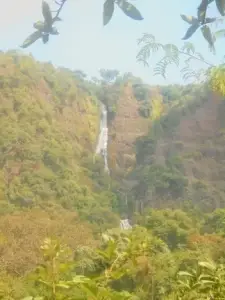
Kurpaye Waterfall
Kurpaye Waterfall Kurpaye is a small river flowing through an artificial forest in Dega Ocholo Kebele. Since this river flows in winter and summer, the local residents use it for various purposes, in addition to their daily lives. The existence of this river is mainly the basis of the existence of the forest, and it is found to be a source of incredible beauty for both the forest and the surrounding area, rising from the surrounding mountainous area. The sound created when the river flows, along with the sounds of birds. Not only enhances the sense of connection between nature and the ecological beauty of the place. But also refreshes the spirit. Kurpaho Waterfall is located in Arba Mch Zuriya Woreda in Dega Ocholo Kebele. And is a natural attraction created on the Kurpaho River. Since the area where the waterfall is located is covered in forest. It creates a special splendor for the area and is also attractive to the eye. The location is close to Arba Minch town, making it convenient for visiting.
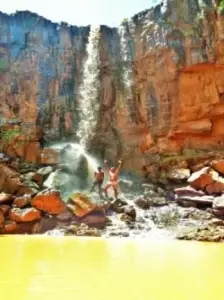
Garmo Waterfall (Garmo Chololo)
Garmo Waterfall (Garmo Chololo) is one of the natural tourist attractions in the Zaise Wine Highlands. It is a waterfall formed on the Garmo River that flows through the agricultural lands of Wale and Tsingula. The Garmo Waterfall, which falls from a height of 22 meters. Is a natural blessing that can attract the attention of our visitors with its attractive appearance. We traveled from Zaise Wezeka to Zaise Dembile on the road and when we reached ‘Kolo Boche’. We turned left and walked for about 1.5 kilometers to see this wonderful work of nature. Garmo Shafe, Kartsa Shafe, Labosh Shafe, Mela Shafe and other small streams form the Wezeka River basin. Garmo Waterfall (Garmo Chololo) The valley where the waterfall is located has a beautiful landscape covered with native trees. If, To see the waterfall cascading down the valley, one must have experienced climbing and descending the mountain. Feeling the feeling of ‘soul inside, soul outside’, I bravely explored the valley with the help of local farmers. When The cold water captivated me and I went in to swim. Since no one had come to visit or see it before, we were afraid, but when we bravely entered. The cold water refreshed our spirits and washed away our fatigue, and we laughed like children. The waterfall called ‘Garmo Chololo’ in Zaysi, along with the historical, natural and man-made tourist attractions in Zaysi, will undoubtedly be the future potential of Zaysi’s tourism sector. however, There are three different waterfalls in the same area on the Garmo River. When The one pictured below is the tallest, 22 meters high, with a natural swimming pool. It has been necessary to number the waterfalls one, two, and three to make it easier to see them separately. Finally, The one pictured below is the tallest and located between the two waterfalls, Garmo Waterfall Number Two.
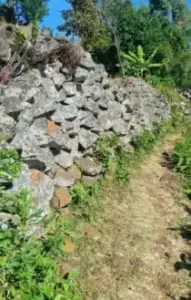
Marta (Zayse Nationality Traditional Administration Palace)
Marta (Zayse Nationality Traditional Administration Palace)The Zayse Nationality’s traditional administrative system is known as ‘Haise’ or ‘Woga’. It is a traditional and indigenous system that governs the social, economic, administrative and universal interaction of the nation. Under this system, the Zayse State was sovereign until 1886 AD. The Haise administrative system has a permanent and central seat. The kings from the first Kat Ale to the 12th Kat Mesha used Josha as their central seat for centuries. The administrative center was moves from Josha to Kaibene Marta during the reign of Kat Oga, according to the ancestors of the nation’s history. Marta was built and rebuilt during the reign of Kat Oga and has been the center of Zayse administration since the reign of Kat Zona. Since ancient times, many kings have ruled and governed their people. Marta is an ancient Zayse palace located in Kaybene Kebele at an altitude of 1948 meters above sea level. The palace, which was used as the administrative center and residence of the kings by the Zayse community, is known as ‘Marta’ in Zayse. The reasons given for the relocation of the palace from Xosha to Kaibene are: the first is the increasing population; the second is the search for land for agriculture and grazing of livestock that can accommodate the increasing population; the third is the search for a strategic location to prevent conflicts with neighboring states; and the fourth is the fact that Mount Kaibene is the highest point and the highest point of the Zayse kingdom, and it is also a convenient central location for the general administration system, as it allows you to view the four directions. Marta is a reflection of the ancient Zayse civilization. And the palace that was previously in Xosha was moves to Kaibene. And the palace was surroundes by a special stone wall. Which is the seat of the Zayse traditional administrative system. Marta was the central administrative center where the social, economic and political events of the Zayse nation. If took place until the invasion of Menelik. The stone pavilion, built in three rounds with special skill. Is three to four meters high and has a side width of up to two meters. And covers an area of about six hectares. It is enough to understand that the design, width and depth of the construction have left a special artistic mark on it. Considering that it has stood for many centuries. The Marta compound is six hectares and includes the ‘Sanga’, . The main residence of the king, Dere Dulata, Marta Gura, no less than eight groves of various sizes. Including indigenous trees such as coffee, warka, shola, olive and basana. Marta’s entrance gatesMarta Palace is a very beautiful and beautiful compound as it is. The Marta compound, which covers more than six hectares, is well-walles with stone pavilions. The construction of the Zayse royal palace in Xosha began during the reign of the 10th king. Who believes that it should be moves to Kaibene Marta. This is estimats to be in the 15th century. Marta is a monument that reflects the ancient history, wisdom and civilization of the Zayse people. The stone wall built many centuries ago is still standing today. The fact that it has stood firm without any problems of decay or decay over time is a testament to how wise the construction was. Marta has two main entrances, the first is on the south side and the second is on the west side. The first and largest door is on the south side. There is a door in the direction of the church. According to the elders of the nation. It was the route uses by the nobles coming to the Zayse kingdom from the south. To the right and left of the entrance, from the gate to the center. You will find a beautiful stone courtyard, about one hundred meters long, two meters high, and two meters wide. As you walk inside, you will pass through four different courtyards before reaching the king’s residence, the Sanga. The courtyards were also home to the servants and employees of the palace. In addition, some of the many houses in the Marta courtyard were used as guest houses. Since people from different parts of the Zayse kingdom came to Marta for various reasons. They would rest until their cases were resolved. Those who served the guests also had their own houses and courtyards. So Marta is a palace with no fewer than eight different courtyards. The houses in the large courtyard all have their own stone courtyard walls. In the large courtyard, there are smaller courtyards with stone courtyard walls. So the large gate is usually used as a gate for the disabled. The second gate to Marta is on the west side of the palace. It is towards Bano. The function of this gate was to serve as an entrance gate for Marta Gura. A gathering or meeting with the Magas and for social events to be hold in Marta. The entrance directly leads to Marta Gura. Like the first gate, it is surrounds by stone walls on both sides. According to the history experts of the nation. This gate is usually the gate through which Magas, Sorfas, and elders of the country enter. The distance from the entrance to Marta Gura is about three hundred meters. The main road leads to Marta Gura, while other small roads branch off and lead to different courtyards. If you want to go to Marta Gura, just take the wide road.
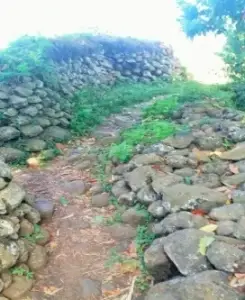
Eight different service areas
Eight different service areas As we have tried to see above, Marta is a palace with a very large courtyard. Its area is about six hectares. What makes Marta unique and amazing is that it has a self-contained village inside. When you enter through the main entrance, you will notice many small courtyards with houses that used to be the palaces. The main courtyard, called Sanga, is the residence of Kat and Kao. It is located in the southeast of Marta’s courtyard. From here, it is a strategic place from which you can see Elgon and Wezeka across the Shanka Plain to the Zaise State of Kola. The courtyard is windy because the wind rises from Lake Chamo. There are many other courtyards that used to be the palaces and provide various services, including guest houses and the residence of the palace servants.
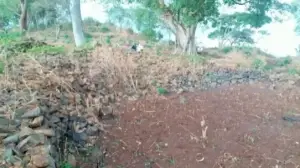
Dere Dulata (People’s Council)
Dere Dulata (People’s Council)The courtyard next to the king’s residence is the Dulata area where the social, economic and administrative plans of the Zayse people are developed and discussed. It is the government department where the general activity plans of the state are developed, reviewed and decisions are made for their implementation. Finally It is the government department where new social, economic and administrative plans are designed and existing ones are reviewed. When The king, the king’s advisors, and the elders participate in the discussion. The majority of the participants in the discussion are different, depending on the stakeholder groups participating in the discussion agenda. Additionally The discussion agendas presented in each Guta Maga are attended by the Maga, Sorofas, and elders in the same area. But if the agenda concerns the entire Zayse state, all 28 magas, along with the sorofa and the elders, will participate. But the king and his advisors are permanent and decision-makers. We have seen above that one of the issues seen in the Dere Dulata is an administrative function. If In the middle, information about the relations with foreign states, which ensure the peace of the state, is collected from various sources, discussed with the Oge Magas and Tora Magas and the Yeguta Magas, and a report is submitted to the head of the state, the Kat, in this Dere Dulata. In addition to internal affairs, foreign relations plans are developed and presented for discussion. In general, social, economic and administrative plans regarding foreign relations are prepares in this public council. The Dere Dulata Assembly Hall is a traditional gathering hall where the current situation is assessed, directions are set, and decisions are made. Another administrative issue is to maintain the peace and security of the residents of the territory. If disputes and conflicts between individuals, communities, and tribes are not resolved. When Through the lower-level mediation system. The matter is carry to this assembly hall. And a decision or settlement is make in this same Marta meeting place. When disputes and conflicts occur between tribes. Serious crimes are committee’s, and dispute arise with neighboring states, the matter is dealt with in this assembly hall. When serious social, economic, and administrative situations arise in the Zayse ethnic group. The Dere Dulata is a public assembly where elders, sorofas. And magas consult with the king and set a direction for resolution. The photo below shows the seats of the Kat Khama, Kat Salo, and Kaibene Maga. Where they sit and discuss issues with their advisory Magas. Starting with the king, all Magas, Sorofas, and elders of the country, have their own seats at each level.
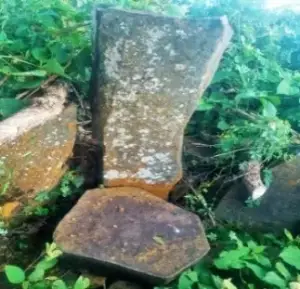
E’o Malo /Tekkel Dingay
E’o Malo /Tekkel Dingay/ When public events, traditional music and dances are performed in Marta Gura, invited guests, elders, sorofas, magas. And kings of neighboring states sit with the Zaise Kat in order of rank and enjoy the event. The Kat Kama seat that we see in the picture is carved with a special design. It has a long backrest and the seat is also made of stone. The stone is carved with special skill and is carved like a long stone for a specific purpose. The Tekkel stones carved and erected by the early Zaise craftsmen are found in various places. And the one in the Marta Gura courtyard should be taken as an example. The stone is specially cut and prepared before being placed on a pedestal.
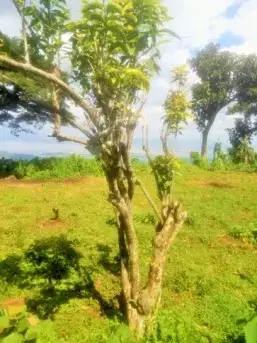
Marta Native Trees
Native trees are a special feature of Marta. Both in Dere Dulata and Marta Gura, public gatherings, cultural events and various ceremonies are held outdoors. Native trees not only provide shade but also serve as beauty to the spaces. Various species of old trees are found in the grounds of the palace. Trees such as Warka, Bassana, Oybeta, Oyera, Tsidna are abundant. Trees are considered sacred by the Zayse community, so cutting them down or damaging them is considered a sin. The coffee tree is one of the trees in the grounds of Marta. I looked closely at it and it captivated my attention. It took me back in time with a sense of history. I touched it and stared at it. Did the king touch it? What about the queen and the servants of the palace? I asked myself. In front of the king’s residence, called Sanga, are three hundred-year-old coffee trees. From there, the fruit, coffee leaves, and coffee were picked and boiled and drunk in the palace. The house has been demolished and is no longer in place. But the trees have life and have withstood various hardships and still stand in their place today, telling us a story without words.
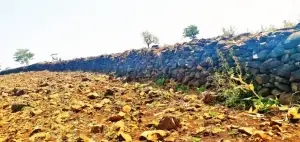
Oibale Boke (Oibale Fortress)
Oibale Boke (Oibale Fortress) It is located in the southern part of Zayse, in an area called Oibale. The fortress got its name from the name of the area where it is located. Oibale Boke starts from the peak of Shanka /Kola/ and crosses the plain and the ridge and reaches the Laboshe Shafe /Laboshe River/. This means that it starts from Shanka plain and reaches the Derashe border. Oibale Fortress is about seven kilometers long. Its average height is one meter and seventy centimeters high and its width is one meter and twenty centimeters. It is located at an altitude of 1502 meters above sea level. When It was built about 170 years ago during the reign of Kat Khalsa between 1845 and 1860 AD, according to the nation’s historians. It is a testament to the craftsmanship and perseverance of the Zayse ancestors. It took years to complete. Finally It was built entirely of stone and was built in the form of a cube with special skill.When Boke, which was built in the direction of Sot in the Zayse territory, was built under the leadership of the king and the Guta Magas and was coordinated and built by the Zayse nobles. Finally Communities in the southern Zayse territory directly participated in the construction. Oybala Boke, which is said to have taken a long time to build, involved a large number of people. It is mostly used by the residents of Yeguta outside the sowing, weeding and harvesting seasons. While men participated directly in designing, delivering stones, building, and coordinating, women would come to the construction site to prepare various traditional foods and drinks, and to encourage, praise, and celebrate with their traditional songs, according to the nation’s historians. The elders, magas, and the king would visit, encourage, and bless the construction process from time to time.
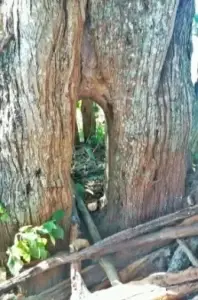
The tree where Kat Salo ruled
The cedar tree where Kat Salo ruled is currently located in Zayse Kalte. Kat Salo’s father passed away before Kaba became king, so the kingship was transferred to Salo. Even though Kaba did not become king before Salo became king, he had children. Salo was an Ekade, so he abdicated in 1929. Going back to our previous story, the cedar tree where Kat Salo ruled was thick and thick enough to allow a person to crawl inside it. As is known, the cedar tree does not grow quickly and does not get thick. It must be at least twenty to thirty years old to be used for royal purposes. It has been eighty-six years since the day of his reign. This makes the tree more than a hundred years old.